Thursday, July 28, 2016

the grace of God that only time can tell -- part 1

The Word for today:
Nehemiah 9:1-21
(Note:  This article was originally published on this date in 2010.)
The Bible often reviews the past in order to make sense of the present and to emphasize God's constant faithfulness. We, too, can be blessed with spiritual perspective when we take time to review the scene in our personal "rear view mirrors."
Over the next couple of days, as Nehemiah chapter 9 recounts the history of God's faithfulness, we urge you to recall your own personal journey with God, and to note the sense and shape that the long view lends our lives. Toward that end, Franklyn will recount from his own life the grace of God that only time can tell.   
***
This past Sunday, we took Frankie and Eddy to a track/cross-country camp in western Pennsylvania. Because we had to be there, I could not attend an event in my hometown. But I managed to get back just as things were winding down.
The event I missed was a re-enactment, in honor of a relay record that I and seven of my high school teammates achieved 42 years ago. We'd run 100 miles in bursts of 100, 200, and 400 meters--actually, it was yards in those days. The record still stands, so a race was organized to both honor our feat and de-feat it, all on the same day!
Even though we arrived in the event's waning moments, when only a few of the teams remained on the track, when the vendors and the band and the officials and the timers were beginning to pack their gear away, I was impressed by the scene. And I got the biggest kick out of an overblown picture, prominently displayed, of our very young selves in our old-time track spikes and our immortal smiles.
Shelley asked if I'd like to take a stroll around the track before we left. We walked together slowly. Something in me didn't want to finish this, my single 400 meter commemorative lap. I was wishing that I could set a world record for the slowest lap of all time. In the mild light of the setting sun, my most-beautiful-in-the-world wife was the most beautiful that she had ever -- that anyone could have ever -- been.
***
I'd hurt myself badly, deeply on that record-setting day long ago. The oddest thing was that I didn't know it until the next day. But thereafter, to one degree or another, I limped through the rest of my high school races. I remained fast, and mighty fast, but I would never be as fast as I was going to be.
Then it occurred to me, as I walked along, trying to stretch that backstretch out to forever, that Eddy is precisely, to the very day, the same age as I was in late June of 1968 when we had run the relay that would eventually bring us all back to the Emmet Belknap track.
The mental gymnastics necessary to make that calculation must have dislodged an array of memories long unvisited. Like a slide show in my head, pictures started to fill the stretches of years and decades. Faces took their places, lining up in their respective relationships to time. Some of them I'd forgotten. Some I'd forgotten on purpose.
My long lap now over, I looked to see if any of the old team were still there. They'd been ceremonially introduced that morning. And, I am told, they'd even led a ceremonial first lap before the relay teams cut loose. But that had been long hours ago; none of them were still around.
***
{"The grace of God that only time can tell" will conclude tomorrow in this space.}
~~~~~~~~~~~~~~~~~~~~~~

Wednesday, July 27, 2016

when holy eyes are smiling

The Word for today:
Nehemiah 8
mark this: Nehemiah 8:1-4
And all the people gathered as one man into the square before the Water Gate. And they told Ezra the scribe to bring the Book of the Law of Moses that the LORD had commanded Israel.
So Ezra the priest brought the Law before the assembly, both men and women and all who could understand what they heard, on the first day of the seventh month.
And he read from it facing the square before the Water Gate from early morning until midday, in the presence of the men and the women and those who could understand. And the ears of all the people were attentive to the Book of the Law.
And Ezra the scribe stood on a wooden platform that they had made for the purpose.
Chapter 8 presents a turning point in the book of Nehemiah.
In chapters 1-7, we saw a nation reborn under the leadership of Nehemiah. Beginning with chapter 8, Ezra re-enters, and we are going to see the born-again nation grow up.
Parallels to the church (which won't be formed until after the death and resurrection of Jesus) are obvious. First, we read that the people gathered as one man. That is a precise picture of what the church--the body of Christ--will be:
For in one Spirit we were all baptized into one body--Jews or Greeks, slaves or free--and all were made to drink of one Spirit. (1 Corinthians 12:13)
Born-again, they/we are then transformed by the reading and teaching of the Word of God:
So Ezra the priest brought the Law before the assembly, both men and women and all who could understand what they heard.
And he read from it facing the square before the Water Gate from early morning until midday.
And the ears of all the people were attentive to the Book of the Law.
And Ezra the scribe stood on a wooden platform that they had made for the purpose. 
(Nehemiah 8:2-4)
And we also thank God continually because, when you received the word of God, which you heard from us, you accepted it not as the word of men, but as it actually is, the word of God, which is at work in you who believe. (1 Thessalonians 2:13)
The people weep at the reading, for the Word of God lays lives bare, exposing how far short of God's standards we have fallen:
For the word of God is living and active. Sharper than any double-edged sword, it penetrates even to dividing soul and spirit, joints and marrow; it judges the thoughts and attitudes of the heart. (Hebrews 4:12)
But they are told to celebrate:
"Go your way. Eat the fat and drink sweet wine and send portions to anyone who has nothing ready, for this day is holy to our Lord. And do not be grieved,  for the joy of the LORD is your strength." (Nehemiah 8:10)
They are to celebrate because God is happy with them!--
Therefore, since we have been justified by faith, we have peace with God through our Lord Jesus Christ. Through him we have also obtained access by faith into this grace in which we stand, and we rejoice in hope of the glory of God. (Romans 5:1-2)
The justice of the Law brings sorrow. But the joy of the Lord brings strength. Notice that it’s not joy in the Lord but the joy of the Lord that brings strength. That is, it’s not our joy in Him, but His joy over us that is our strength:
The Lord thy God in the midst of thee is mighty; he will save, he will rejoice over thee with joy; he will rest in his love, he will joy over thee with singing. (Zephaniah 3:17)
***
About 400 years after Ezra and Nehemiah, the pitiless condemnation and the infinite forgiveness of the Word of God would be embodied by a single man, raised high on a wooden structure within the shadow of Jerusalem's walls.
Wherever you go to church, make sure that man--who by his very being is the pronouncement of the Word of God--is lifted up high:
"And I, when I am lifted up from the earth, will draw all people to myself." (John 12:32)
Make sure that the Word of God is read and taught and treasured and followed. Make sure that the problem--sin--is pronounced; and that the remedy--God's reconciliation through Jesus' death and resurrection--is the lasting emphasis.
And make God's smile your strength.
~~~~~~~~~~~~~~~~~~

Tuesday, July 26, 2016

stop listening to people wearing millstones

The Word for today:
Nehemiah 7
 
I know I'm a child of God. You know how I know? I know it because I know my Father.
I know his heart and his promises. I saw them acted out at the cross.
***
Recently I sat in on a Sunday school class where the old subject of assurance came up. So I listened as people weighed in on whether or not we can be certain we are saved.
I feel like screaming whenever this nonsense comes up, because to say we can't be sure is a refutation of everything God stands for, and everything he has done. To say we can't be sure is to call God a liar:
Whoever believes in the Son of God has the testimony in himself. Whoever does not believe God has made him a liar, because he has not believed in the testimony that God has borne concerning his Son. And this is the testimony, that God gave us eternal life, and this life is in his Son. Whoever has the Son has life; whoever does not have the Son of God does not have life. I write these things to you who believe in the name of the Son of God that you may know that you have eternal life. (1 John 5:10-13)
I will go so far as to say--to those who sow these doubts in Sunday schools, pulpits, and seminaries--that if you don't know you're saved, you probably aren't! Because the God who saved me certainly didn't leave me guessing. If the god you're dealing with isn't god enough to save you for certain, your god isn't Jesus Christ. You might call him that, but you've mistaken him for somebody else. Because all who trust him are legitimate children:
To all who did receive him, who believed in his name, he gave the right to become children of God, who were born, not of blood nor of the will of the flesh nor of the will of man, but of God. (John 1:12-13)

***
In today's reading, Nehemiah searches the genealogies, going to great lengths to identify legitimate sons:
Then my God put it into my heart to gather the nobles, the rulers, and the people, that they might be registered by genealogy. (Nehemiah 7:5)
And there were some who… could not identify their father’s house nor their lineage. (Nehemiah 7:61)
They sought their listing among those who were registered by genealogy, but it was not found; therefore they were excluded from the priesthood as defiled.  (Nehemiah 7:64)
The Bible teaches that if you don't know you are legitimately a child, it's because you don't really know your father. So if you happen to be one of those who can't say for certain that you are an eternal child of God, it would be wise to re-evaluate; to reject any god who can't save for certain; to turn in renewed faith to Jesus Christ--who died, suspended between heaven and earth, so that we wouldn't be left (either literally or figuratively) hanging.
***
After the troubling Sunday school class which prompted this plea, one of the students rushed up to me. She wanted to know whether her salvation might be in jeopardy. So I told her...
[ I can hardly tell this story. I'm going to exit this blog because I have to find and strangle those who caused this child of God to doubt. No, I won't need to strangle 'em. God's already seen to that; he's got a millstone waiting for those who create doubt (the seminal sin) in his children who believe:
Whoever causes one of these little ones who believe in me to sin, it would be better for him to have a great millstone fastened around his neck and to be drowned in the depth of the sea. (Matthew 18:6) ]
…I told her that, according to the Word of God, Jesus became sin for us, so that we might become the righteousness of God in Him. (2 Corinthians 5:21)
…"Righteous," I said, "means a lot of things. But the thing for you to remember is that righteous means you have as much right to be in heaven as Jesus Christ himself. So don't ever let anybody snatch your assurance from you. And don't ever forget this: In order for God to kick you out of heaven, he would have to kick Jesus out with you."
***
And so I say to you what I said to her:  In order for God to kick you out of heaven, he would have to kick Jesus out, too.
So rest assured, child of God.  And stop listening to people wearing millstones!
~~~~~~~~~~~~~~~~~~

Monday, July 25, 2016

Should such a man as I run away?

The Word for today:
Nehemiah 6
I tire, quickly, at the tone of voice affected by the current crop of Christian men.
Bending over backwards to be humble--humble, above all else!--we defer too readily, apologize too quickly, agree too broadly, and compromise too much.
When I first read the Bible, I didn't know much about theology. Unschooled in the niceties of faith, I read about a man who, with 12 often bumbling disciples, stood against the legions of Rome, the forces of the Sanhedrin, and the bizarre political cauldron stirred by the psychopathic Herods.
What I remember being struck by, more than anything else, was the man's sheer guts.
His guts. Jesus' flat-out bravery gets lost amidst the grace, the forgiveness, the humility--humble, above all else!--the compassion, and the love.
We don't characteristically hear, from our pulpits nor from the men in our pews, the tone of Christ's voice which is prefigured by Nehemiah in today's reading:
Should such a man as I run away?  (Nehemiah 6:11)
That's the voice that cleared the temple. That's the voice that blistered the Pharisees. There is not, in that voice, a scintilla of either deference, or forgiveness, or compassion, or agreeableness.
I am following the bravest man I've ever met. You can talk about walking on water, and feeding five thousand, and calming the raging sea; but I hear most clearly, amidst the din of this battle, the commanding voice of the man who set his face like flint (1) for a date with Roman torturers--with their fists and their flogs and their nails and their cross--when he could have summoned 12 legions of angels. (2)
The unparalleled bravery which didn't call 12 legions of angels to his rescue remains, to me, his greatest miracle --because it was in the losing of that battle that the lone soldier won the war.
***
Can you say 'ass' in a Bible blog? Well, having already introduced the topics of guts and gonads, I'll risk it--in order to tell a story demonstrating what I hear as a Christ-like voice...
John Wesley--the great reformer, theologian, and evangelist--was about to cross a brook over which was a very narrow bridge, just wide enough for one person. As he was starting over, he met a liberal preacher of that day. This preacher swelled up and said, “I never give way to an ass.” John Wesley looked at him for a moment, smiled, and began to back off, saying, “I always do.”
"Should such a man as I run away?"
~~~~~~~~~~~~~~~~~~~~
(1) see Isaiah 50:7 and Luke 9:51; (2) Matthew 26:53

Sunday, July 24, 2016

God's fantastic memory

The Word for today:
Nehemiah 5
One of the dearest prayers in the Bible is before us today:
Remember me, my God, for good, according to all that I have done for this people. (Nehemiah 5:19)
Remember me, my God, for good.
God's memory works differently than ours. More on that in just a bit. But first, let's look not at God's memory, but at his "forgetter."
God so thoroughly forgives that he forgets! Sins forgiven through the blood sacrifice of Jesus Christ are not just forgiven, they are dropped into the middle of the deep blue sea:
He will again have compassion on us; he will tread our iniquities under foot. You will cast all our sins into the depths of the sea. (Micah 7:19)
That's God's great "forgetter." But what about his "rememberer?"
Our memories recall things. But when God remembers, it's not just mental activity; it's redemptive activity.
One of the delightful verses in scripture is Genesis 8:1--
But God remembered Noah...
This verse is very instructive, because it points out what it means to be remembered by God. If I were to suddenly remember something, it means that something had previously slipped my mind. But God never forgot about Noah in the first place!
Whenever God remembers us, he sends something good our way:
• Genesis 9:16: "Whenever the rainbow appears in the clouds, I will see it and remember the everlasting covenant between God and all living creatures of every kind on the earth."
• Genesis 30:22: "Then God remembered Rachel; he listened to her and opened her womb."
As soon as God remembered Noah, the floodwaters started to subside. As soon as God remembered the rainbow, he blessed the earth. As soon as God remembered Rachel, she became pregnant. As soon as God remembered his people in slavery, he started their journey of redemption:
"God heard their groaning and remembered his covenant with Abraham, Isaac and Jacob. So God looked on them and was concerned about them." (Exodus 2:24–25)
Whenever the Bible says God remembers, it means God will act for someone according to his covenant (commitment) promises, pouring undeserved goodness on his people.
So I hope we pray the prayer that Nehemiah prayed. I hope we pray it every day:
Remember me, my God, for good.
What a fantastic memory He has!
~~~~~~~~~~~~~~~~~~

Saturday, July 23, 2016

praise the LORD, and pass the ammunition

The Word for today:
Nehemiah 4
We often think of prayer as something contemplative.
So Nehemiah, being an action figure, is often overlooked when we search for insight into prayer.
But lately I have found, in Nehemiah, more instruction on prayer--and more inspiration to pray--than almost anywhere else in the Bible.
Yesterday we learned about prayer in the midst of action. Today we will learn how God often activates answers to prayer through--are you ready?--through us.
For example, you pray that your family will more closely follow God. Now take a look at that prayer from God's point of view. Who on earth is better positioned and more motivated to lead them forward than--are you ready?--than you? Taking spiritual leadership, then, in your formerly leaderless home, you are God's answer to your prayer.
You pray that your church would be more Bible-loving and Bible-literate. Now look at that prayer from God's point of view: Who is hungrier, more motivated, and more impassioned concerning that prayer than--are you ready--than you? So, ordering two study Bibles, Strong's Concordance, Unger's Bible Dictionary, and the complete commentaries of John MacArthur and J. Vernon McGee, you wait on the porch for the big brown truck to pull into your driveway. Perhaps you are not aware of it, but the answer to your prayer is on your porch, days before the UPS truck arrives.
Your church is cold. No, the heating works fine, but that blazing Jesus compassion is nowhere to be found. So you pray for the spark to be kindled. Looking at that prayer from God's point of view, guess who he found to stoke the fires of compassion?
We must realize that God prepares ahead of time. He gives spiritual gifts, he grows spiritual fruit. Then, by his Spirit, he prompts a prayer asking for their implementation.
Nehemiah knew this principle well:
We prayed to our God and posted a guard. (4:9)
Remember the LORD...and fight. (4:14)
Having prayed for safety, each person held a trowel in one hand, and a sword in the other. (4:16-17)
People might protest that this isn't "faith." I strenuously disagree.
When are we going to learn that we are supernaturally called, commissioned, gifted, fruited, empowered--and then prompted to pray the very prayer that--are you ready?--that we have been prepared to fulfill.
You are the body of Christ. You are God's supernatural plan. So praise the LORD, and pass the ammunition.
~~~~~~~~~~~~~~~~~

Friday, July 22, 2016

we may not fit in, but we're not stupid

The Word for today:
Nehemiah 3
There are certain verses in the Bible that we would call pivotal. Looking over page one of my Bible, I can spot a couple of these crucial passages. Certainly "In the beginning God..." is one of them. Just two verses later, "Let there be light..." is another.
But some of the most significant verses in the Bible aren't as well known. An example of a seemingly obscure line which is absolutely essential to the Word of God is found in Nehemiah 2:1:
In the month of Nisan, in the twentieth year of King Artaxerxes, when wine was before him, I took up the wine and gave it to the king. Now I had not been sad in his presence. (Nehemiah 2:1)
The great significance of this verse lies in the dates given: In the month of Nisan, in the twentieth year of King Artaxerxes...
This verse allows us to establish a timeline for "The Prophecy of the Seventy Weeks," which is found in Daniel 9. There you will read that 70 "weeks" of years (70 x 7 = 490 years) begins at the time of "the going out of the word to restore and rebuild Jerusalem." The only decree in scripture authorizing the rebuilding of the city is recorded right here in Nehemiah chapter 2--in the twentieth year of King Artaxerxes.
Well attested records of ancient history fix this date as 445 B.C.
We will look more closely at the particulars of this great prophecy when we reach Daniel. But in the meantime, the Bible student does well to understand that the history, the genealogies, and dates of the Old Testament are there for a reason.
How about this for a reason:
Putting together Nehemiah chapter 2 and Daniel chapter 9, it is possible to derive the very year of the Messiah's death: 483 years after 445 BC.
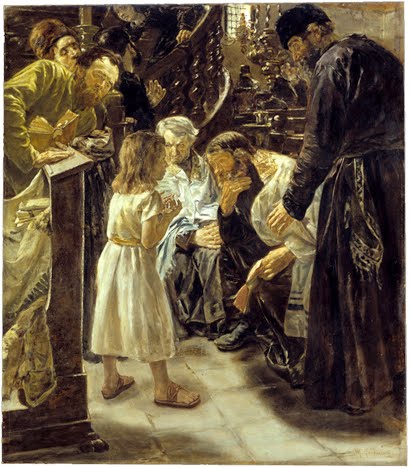
We read, in Luke 2:41-50, the account of young Jesus in the temple among the scholars, who were amazed at his understanding and his answers. I am confident that one of the topics they discussed there was the linkage between Nehemiah 2:1 and Daniel chapter 9. I surmise, by their amazement, that the greatest scripture scholars in all of Israel found out, on that day, that their generation would see the Messiah--that Scripture had targeted their time. They were informed of this by the irrefutable exegesis of a 12 year old boy. (I can not prove it, but I am firmly convinced that it would not be until years later that the boy came to a further realization: Scripture had targeted not only his time, but him.)
***
Our faith does not rest on a bunch of fables or baseless hopes. It rests on meticulously recorded history and eyewitness confirmation. It rests, ultimately, on the Word and character of God. Our faith is not, in any way, a leap in the dark. We are not leapers. And we are very choosy about whom we trust.
God's children do not readily fit into the cultures and systems of this foreign world. We are seen, rightly so, as misfits in this present darkness. But that doesn't mean we're stupid.
~~~~~~~~~~~~~~~~~